

Marine Survey Sea Trials in Myrtle Beach
Sea Trials Before Buying a Boat
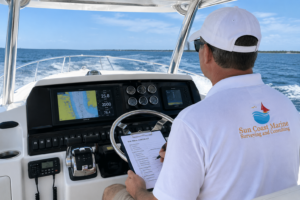
Buying a boat is a major investment, and a proper sea trial is one of the most important steps you can take before completing the purchase. A sea trial gives you the opportunity to see how the vessel actually performs under real operating conditions instead of relying only on how it looks at the dock.
At Sun Coast Marine Surveying & Consulting, we conduct sea trials as part of a thorough pre-purchase evaluation so buyers can better understand the vessel’s performance, handling, operating condition, and any issues that may not be obvious during a dockside inspection.
Why a Sea Trial Matters
A boat can look excellent while sitting at the dock and still have significant problems once it is underway.
A sea trial allows the vessel to be operated under load so important systems can be evaluated while they are actually working. This can reveal performance issues, abnormal vibration, overheating, steering problems, engine concerns, electrical issues, and other conditions that may not appear during a static inspection.
For a prospective buyer, this information can be extremely valuable before making a final purchasing decision.
A professional sea trial can help you:
- Identify problems that may only appear while the vessel is underway
- Evaluate engine and propulsion performance
- Assess steering and handling characteristics
- Check for abnormal vibration or noise
- Confirm whether the vessel reaches expected operating RPM
- Evaluate operating temperatures and pressures
- Observe how the boat performs at different speeds
- Identify potential safety concerns
- Better understand the overall condition of the vessel
- Determine whether additional mechanical or diagnostic testing may be warranted
- Gain valuable information before negotiating or completing the purchase
What Is Typically Evaluated During a Sea Trial?
Every vessel is different, so the exact scope of a sea trial depends on the type of boat, propulsion system, equipment, weather, operating conditions, and accessibility.
Typical areas evaluated may include the following.
Engine Performance
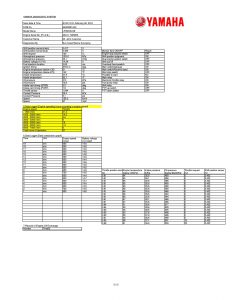 During a sea trial, the engines may be evaluated at different operating speeds to observe how they perform under load.
- Engine starting characteristics
- Cold and warm starting behavior
- Idle quality
- Engine acceleration
- Throttle response
- Maximum achievable RPM
- Manufacturer-recommended operating RPM range
- Engine temperature
- Oil pressure
- Charging voltage
- Engine warning indicators
- Exhaust appearance
- Unusual engine noises
- Hesitation or misfiring
- Excessive smoke
- Engine synchronization on multiple-engine vessels
Reaching the correct wide-open-throttle RPM can be particularly important. An engine that cannot achieve its expected operating range may indicate issues involving the engine, propeller selection, vessel loading, running gear, or other mechanical conditions.
Propulsion and Running Gear
The propulsion system is placed under actual operating load during a sea trial.
- Transmission engagement
- Forward and reverse operation
- Transmission shift quality
- Propeller performance
- Shaft vibration
- Bearing noise
- Stern drive operation
- Outboard trim and tilt
- Trim tab operation
- Propeller ventilation or cavitation
- Excessive vibration
- Unusual drivetrain noise
- Engine mount movement
- Running gear performance
Abnormal vibration can be an important warning sign and may result from damaged propellers, bent shafts, alignment issues, worn bearings, engine mount problems, or other conditions.
Steering and Handling
A sea trial also provides an opportunity to evaluate how the vessel handles.
- Steering response
- Steering effort
- Helm operation
- Hydraulic steering performance
- Rudder response
- Turning characteristics
- Tracking
- Low-speed maneuverability
- Reverse maneuvering
- Acceleration onto plane
- Ability to maintain plane
- Trim response
- Boat attitude at different speeds
- Excessive bow rise
- List or uneven running attitude
Handling characteristics can provide useful clues about the vessel’s condition, weight distribution, propulsion setup, and overall operating characteristics.
Electrical and Instrumentation Systems
Many electrical components are best evaluated with the vessel operating.
- Engine gauges
- Tachometers
- Temperature gauges
- Oil-pressure gauges
- Voltmeters
- Fuel gauges
- Warning alarms
- Navigation electronics
- GPS
- Depth sounder
- Radar, when applicable
- VHF radio
- Bilge pumps
- Blowers
- Navigation lights
- Trim indicators
- Engine monitoring systems
Instrument readings can also be compared with observed operating conditions to identify discrepancies.
Cooling System Performance
Cooling-system issues may not become apparent until the engines have been running under load for a period of time.
- Engine overheating
- Restricted cooling-water flow
- Weak raw-water pumps
- Heat-exchanger problems
- Exhaust cooling issues
- Abnormal temperature differences
- Cooling-system alarms
An engine that operates normally at idle may begin overheating once it is placed under higher load.
Fuel System Operation
Fuel-related problems can also become more apparent underway.
- Fuel-delivery problems
- Engine hesitation
- Loss of power
- Fuel starvation
- Irregular engine performance
- Fuel odors
- Visible fuel leaks
- Fuel gauge accuracy
- Generator fuel supply, when applicable
Bilge and Hull Observations
The condition of the vessel may change once it begins operating and moving through the water.
- Bilge water accumulation
- Shaft seal leakage
- Stuffing box leakage
- Through-hull fittings
- Seacocks
- Engine-room leaks
- Exhaust leaks
- Water intrusion
- Structural movement
- Unusual hull noise
- Loose interior components
- Unusual vibration
This is one reason a sea trial can complement a dockside marine survey so well.
Generator and Auxiliary Equipment
When appropriate, auxiliary equipment may also be operated and observed.
- Generator operation
- Generator voltage output
- Air-conditioning systems
- Battery charging
- Inverters
- Thrusters
- Windlass
- Stabilizers
- Hydraulic systems
- Other installed equipment
The exact equipment tested depends on the vessel and the conditions available at the time of the sea trial.
The Importance of Local Water Knowledge
Conducting a sea trial is not simply a matter of leaving the dock, running the engines at full throttle, and returning.
Knowledge of local waters is an important part of conducting a useful and safe sea trial.
Local waterways can include shallow areas, shifting shoals, tidal currents, narrow channels, no-wake zones, bridges, commercial traffic, submerged hazards, and areas where operating conditions can change quickly.
In the Myrtle Beach and Grand Strand area, factors such as tides, inlets, the Intracoastal Waterway, local channels, current, water depth, and marine traffic can influence where and how a sea trial should be performed.
An experienced marine surveyor familiar with the area can help select appropriate locations and conditions for conducting different portions of the test.
Local knowledge can be particularly important when evaluating:
- Wide-open-throttle engine performance
- High-speed operation
- Turning performance
- Steering response
- Trim characteristics
- Acceleration
- Low-speed maneuvering
- Current and wind effects
- Shallow-water operation
- Docking characteristics
The goal is to evaluate the vessel effectively without unnecessarily putting the boat, passengers, or equipment at risk.
Why Have Sun Coast Conduct Your Sea Trial?
A buyer may be tempted to rely solely on the seller, broker, or current owner during a test run. While they may know the boat well, their objective is different from yours.
Sun Coast Marine Surveying & Consulting works for the buyer.
Our role is to observe the vessel from the perspective of its condition, performance, safety, and suitability before you complete your purchase.
Having Sun Coast involved in the sea trial provides an independent professional perspective and allows the trial to become part of the larger pre-purchase evaluation.
We look beyond whether the boat simply “runs well.”
We pay attention to how the vessel behaves, how its systems respond under load, and whether operating characteristics suggest that further investigation may be necessary.
A Sea Trial Works Best With a Pre-Purchase Marine Survey
A sea trial should generally be considered part of the overall vessel evaluation rather than a replacement for a comprehensive marine survey.
A pre-purchase survey evaluates the vessel’s physical condition and accessible systems, while the sea trial provides the opportunity to evaluate many of those systems while the boat is operating.
Together, they provide a much more complete picture.
Depending on the vessel, Sun Coast may recommend additional services such as:
- Marine engine diagnostics
- Thermal imaging
- Oil or fluid analysis
- Mechanical inspection by an engine specialist
- Additional electrical testing
- Haul-out and bottom inspection
- Further investigation of specific deficiencies
Know Before You Buy
The purpose of a professional sea trial is simple: help you know more about the boat before you own it.
Problems discovered before the purchase may influence your decision, provide important information for negotiations, or allow you to budget for repairs and maintenance.
Sun Coast Marine Surveying & Consulting provides professional marine surveys and sea trial evaluations for buyers throughout Myrtle Beach, North Myrtle Beach, the Grand Strand, and surrounding South Carolina coastal areas.
If you are considering purchasing a powerboat, sailboat, yacht, or other vessel, contact Sun Coast to discuss a pre-purchase marine survey and sea trial before completing your purchase.